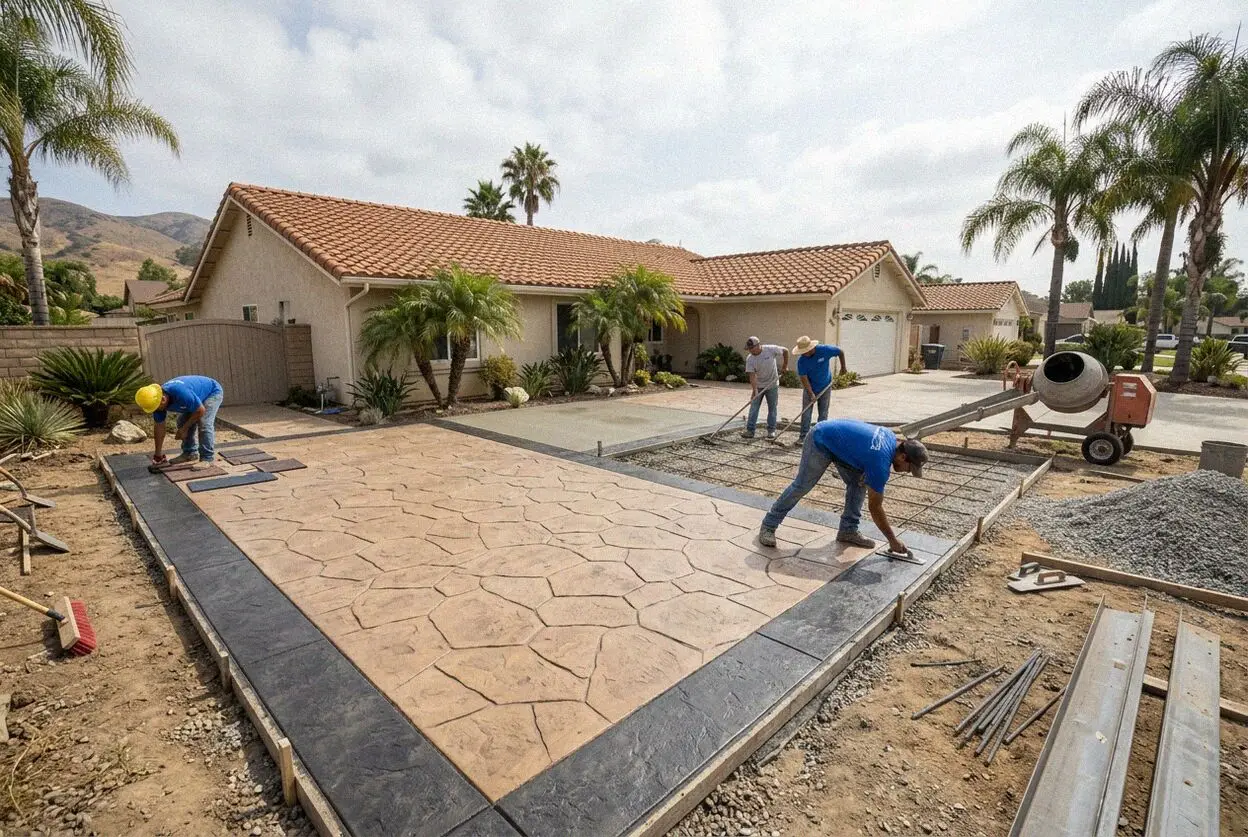
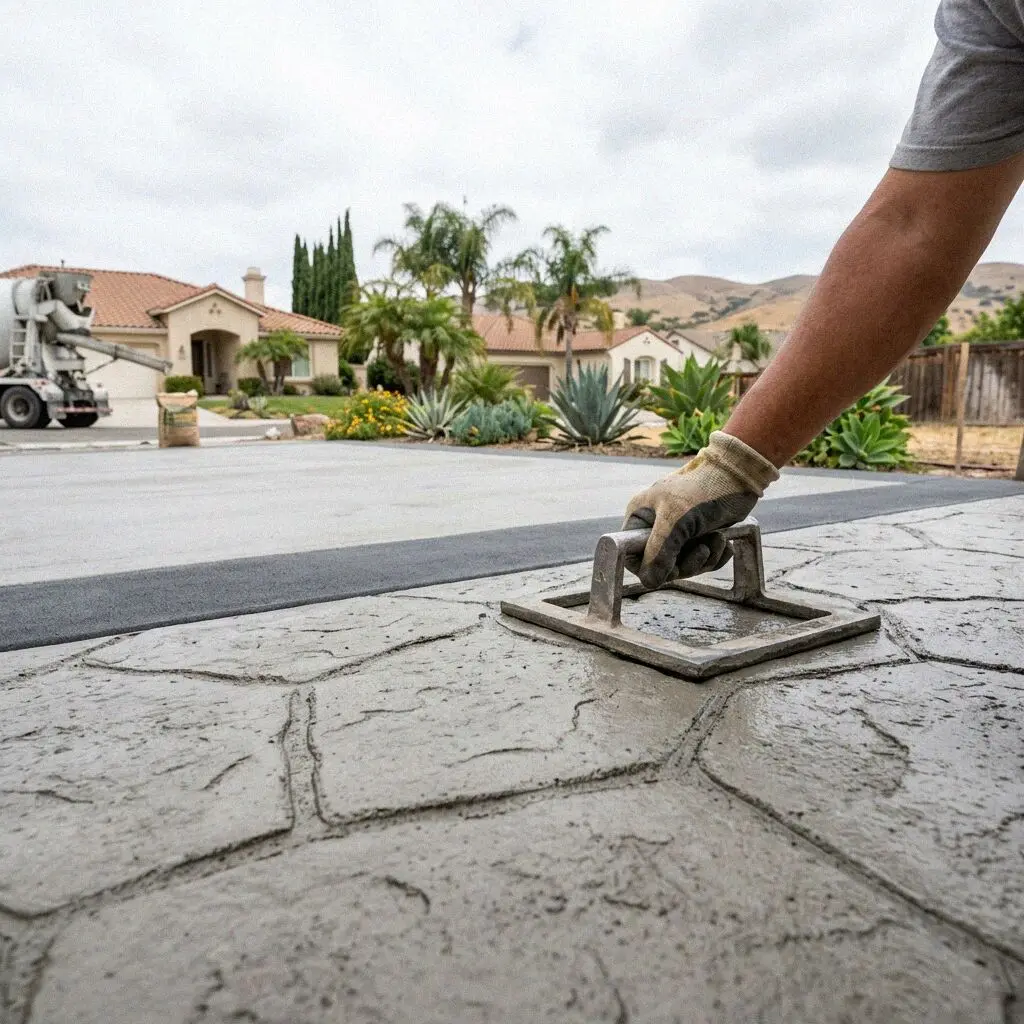
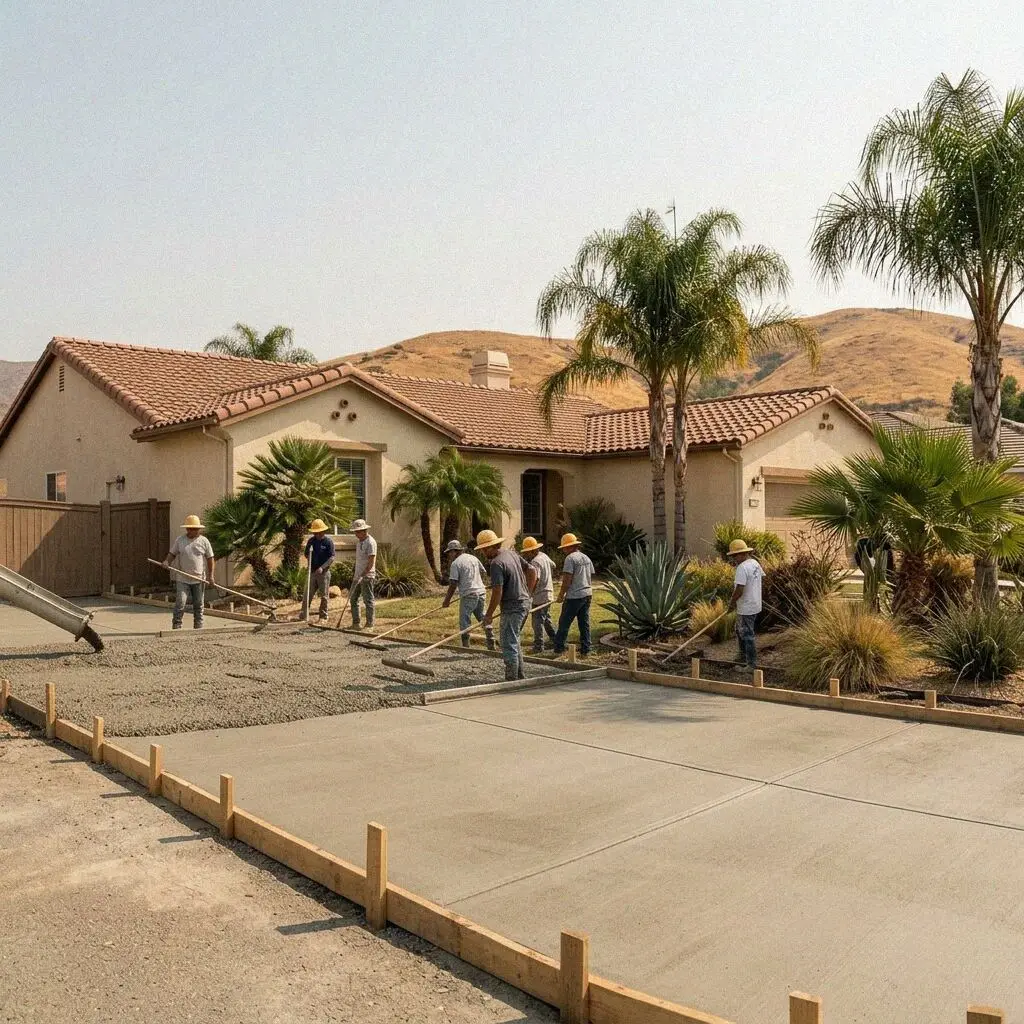
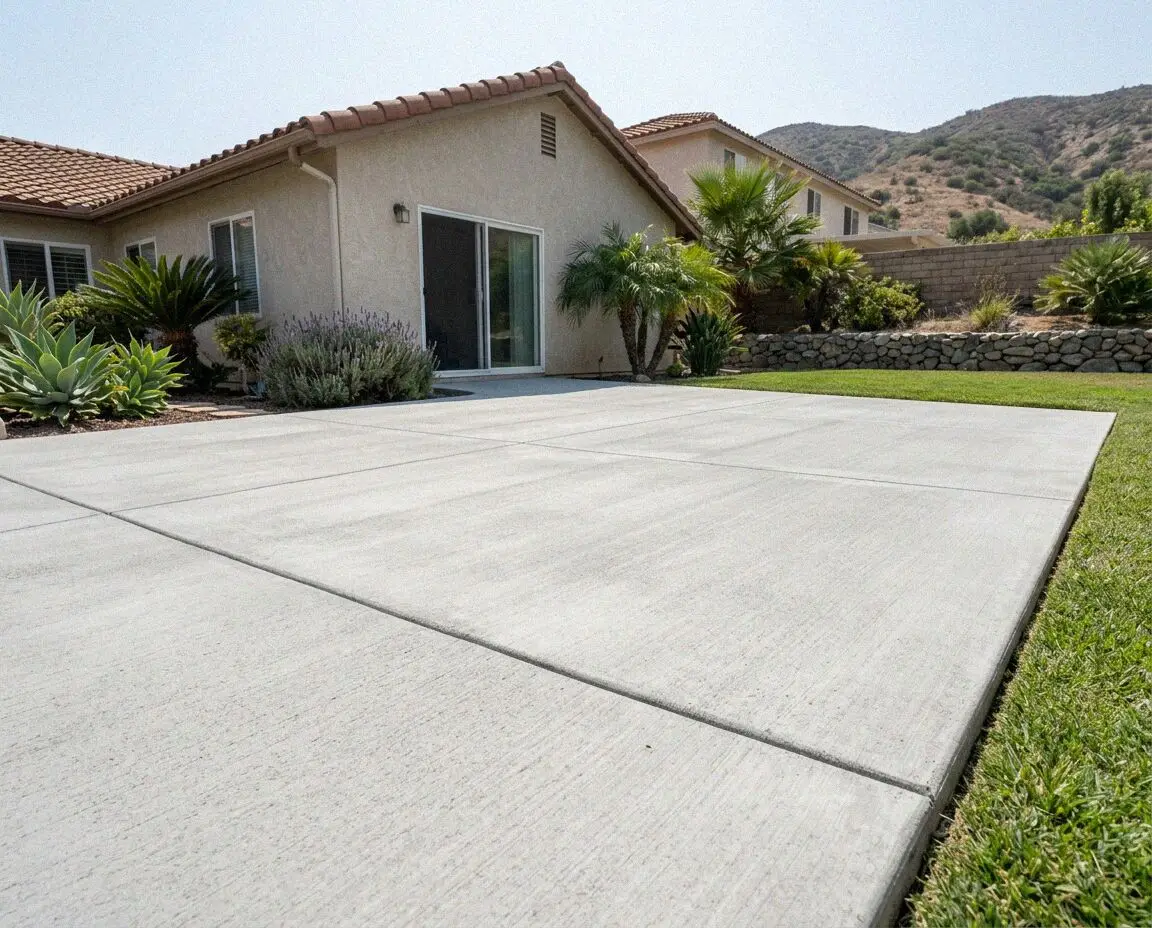
Stamping is a finish rather than a kind of concrete. What sits underneath is the same 4 inches on the same compacted rock a broom-finished pour gets, and everything that makes the slab stamped work happens in the top half inch: pigment batched through the load or cast onto the surface as a dry hardener, a release powder so the mats lift clean, and the pattern pressed while the top is still soft. None of that is a coating rolled on later, and none of it can be moved once it has taken.
Fourteen years on crews across north Orange County came before the yard, which Grant Yoshida opened in 2021, and he strikes the datum himself on the morning of a pour. A mat leaves an impression a quarter of an inch deep and it stays where it lands, so the first line is set off the house wall or the door opening rather than a form edge, and every mat after registers to it. Get that wrong and there is no correcting it, a half stone against the wall is there for the life of the slab.
This is C-8 concrete work, with liability insurance on every job behind it. A finish changes nothing structural, so the slab beneath it is filed on the rules it would face plain. The 28 days a colored slab waits before its first sealer coat is the Portland Cement Association figure, not a habit of ours, and the release is off it long before then. Nothing closes until you have walked it, and a written workmanship guarantee against defects in how it was built goes with it.