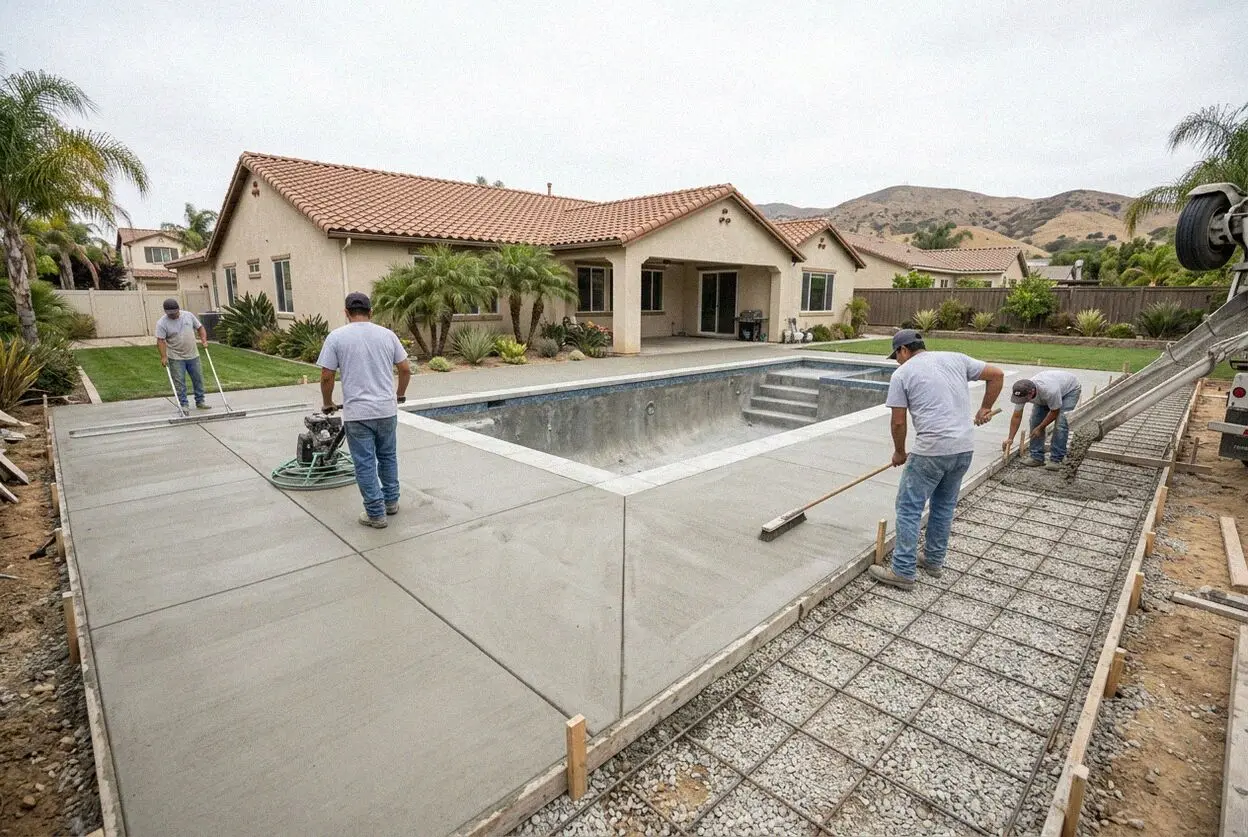
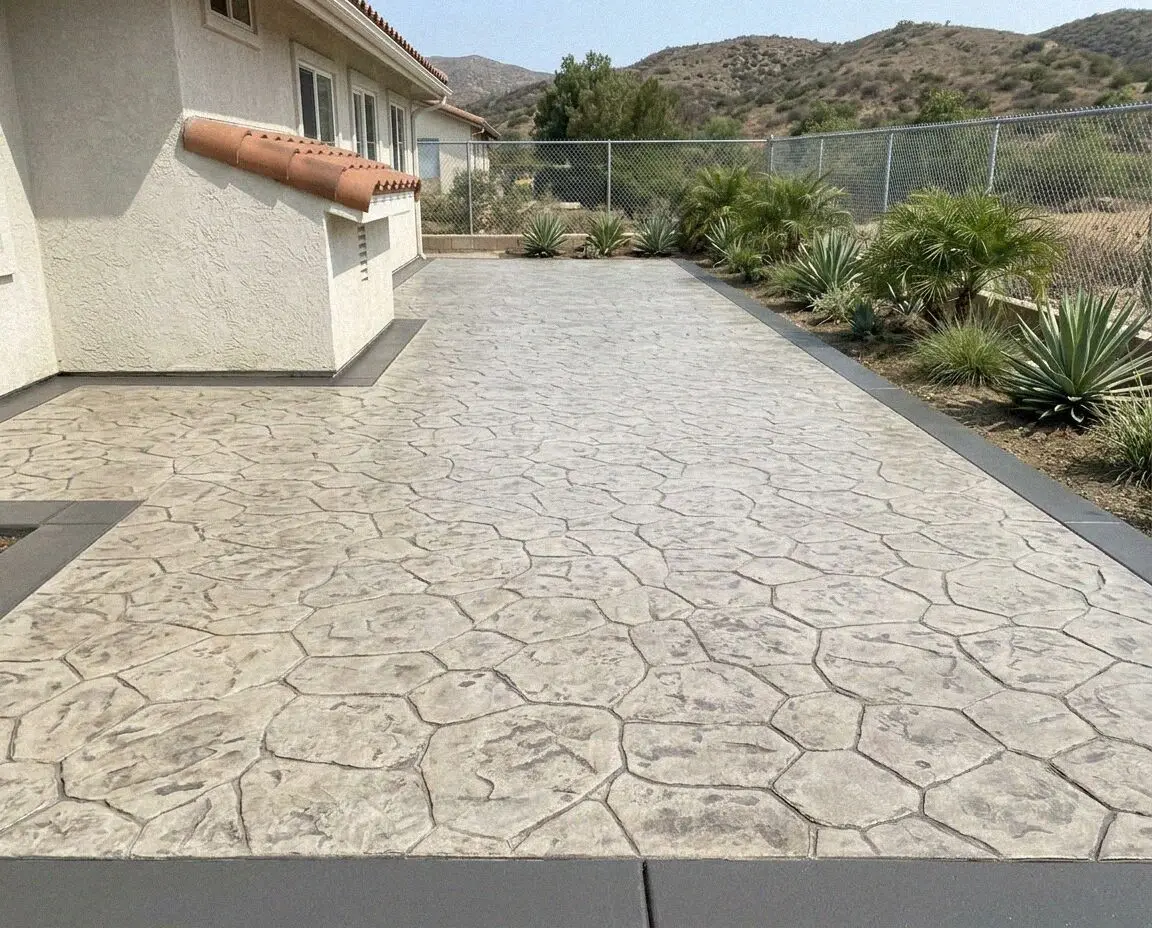
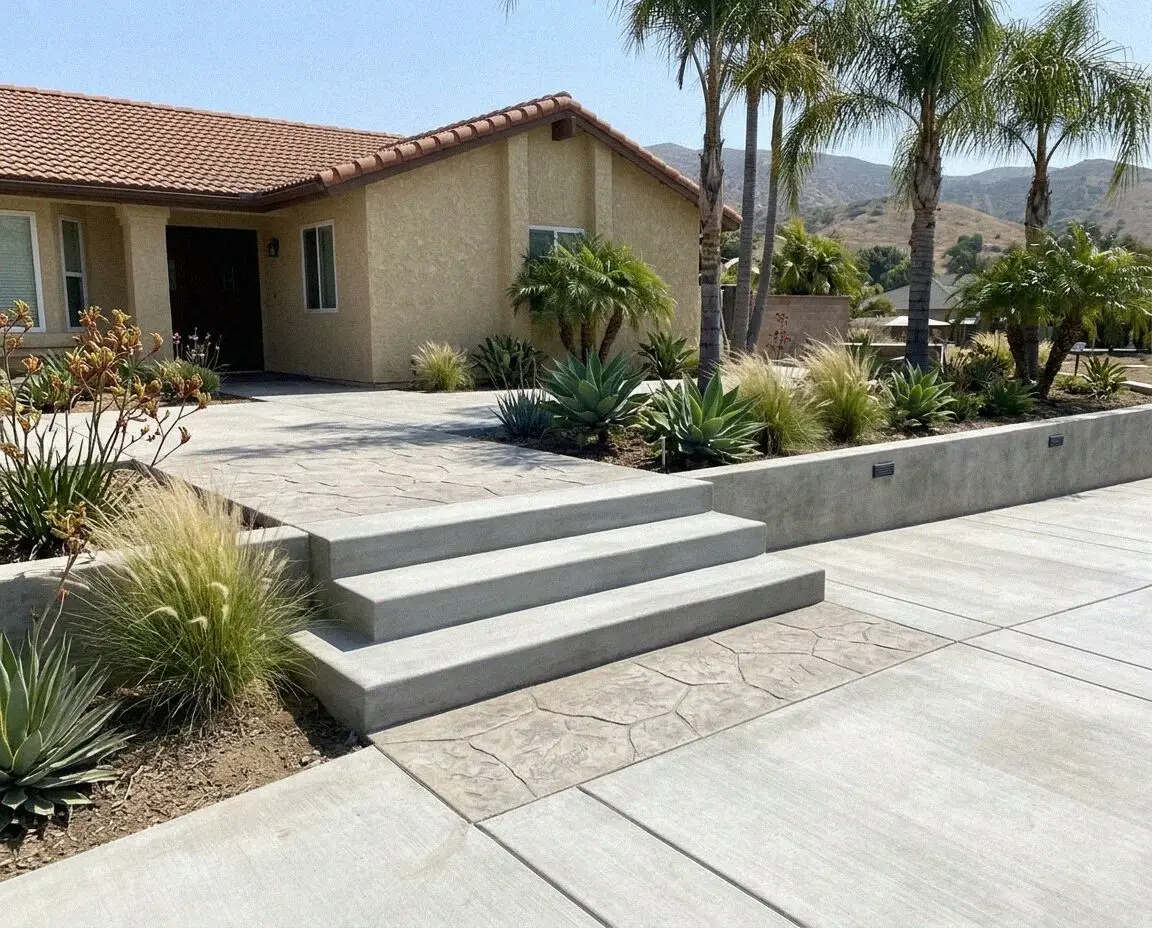
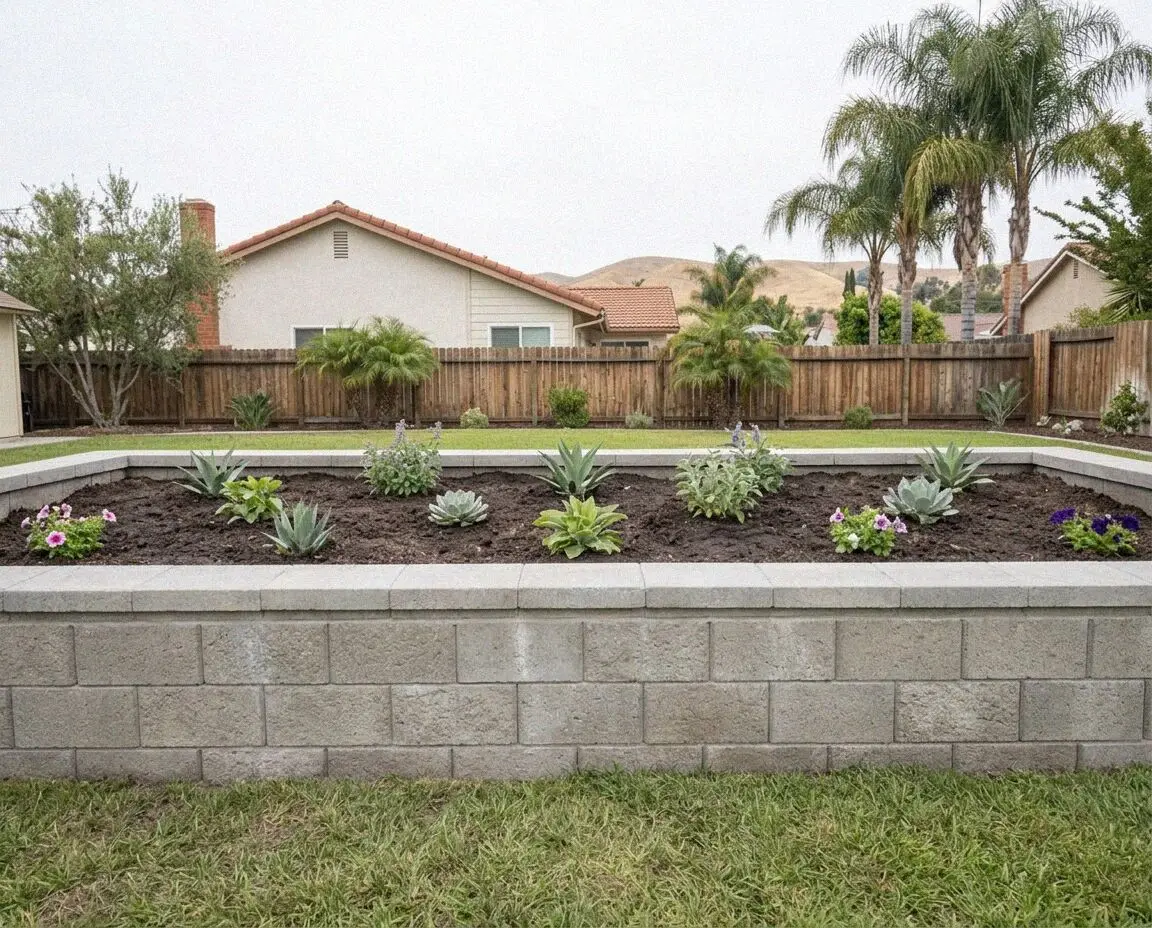
A pool deck is the one slab on a lot that is tied to something rigid. The shell is 6 to 8 inches of gunite on steel and it does not move; the deck around it sits on a foot of sand over clay and it does. Cast the two together and the deck carries every lift of the ground into the bond beam, and the first thing to go is the tile at the waterline. Cast them apart, on a joint that takes half an inch of movement, and the deck can heave a little every winter without the pool knowing.
Harbor Fullerton Concrete was started in 2021 by Grant Yoshida after 14 years on north Orange County crews, and he sounds the old deck and marks the plumbing before anyone swings a breaker. Most pools here went in behind postwar houses between the 1960s and the 1980s, and the decks round them are original, 3 inches thick, unreinforced, under an acrylic cool coating patched more often than it has been recoated. That deck is at the end of its life. The pool is not.
The deck is flatwork the California Residential Code does not permit on its own, but the pool barrier is not, so any fence, gate or alarm the new deck touches is filed with the city's Building and Safety counter and inspected against the Swimming Pool Safety Act. The work runs under a CSLB C-8 license with liability insurance on every job, one crew from breakout to hand-over, and leaves with a written workmanship guarantee against defects in how it was built.