Serving Fullerton, CA and surrounding areas.(657) 500-3759
Harbor Fullerton Concrete

Decorative Concrete in Fullerton, CA, Under Trees Planted With the Tract

Harbor Fullerton Concrete redoes the pebble finish a 1960s tract was poured with, or stains and cuts a plain slab, under the trees that shade it. Every estimate is measured and written on site.

Google reviewsFacebook reviewsBetter Business Bureau reviews5.0 Stars How customers score us · Google, Facebook and the BBB
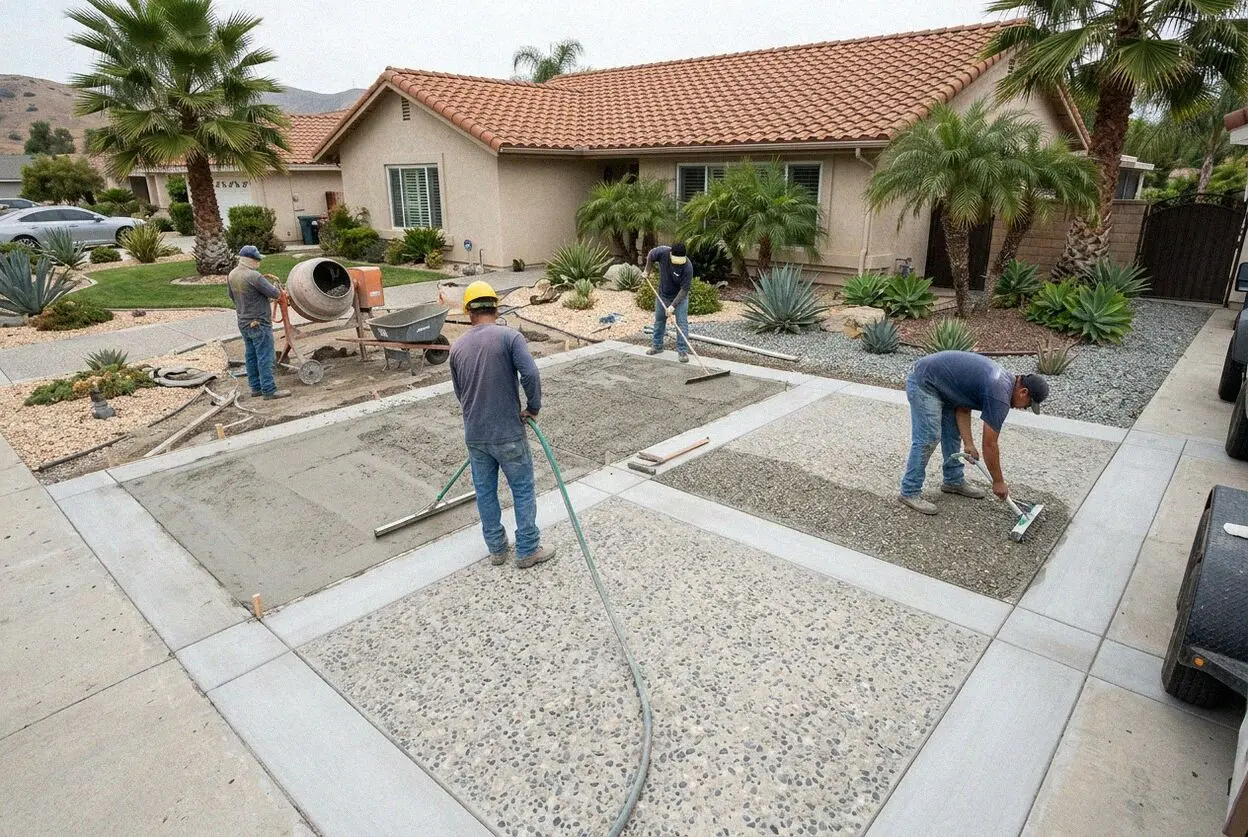
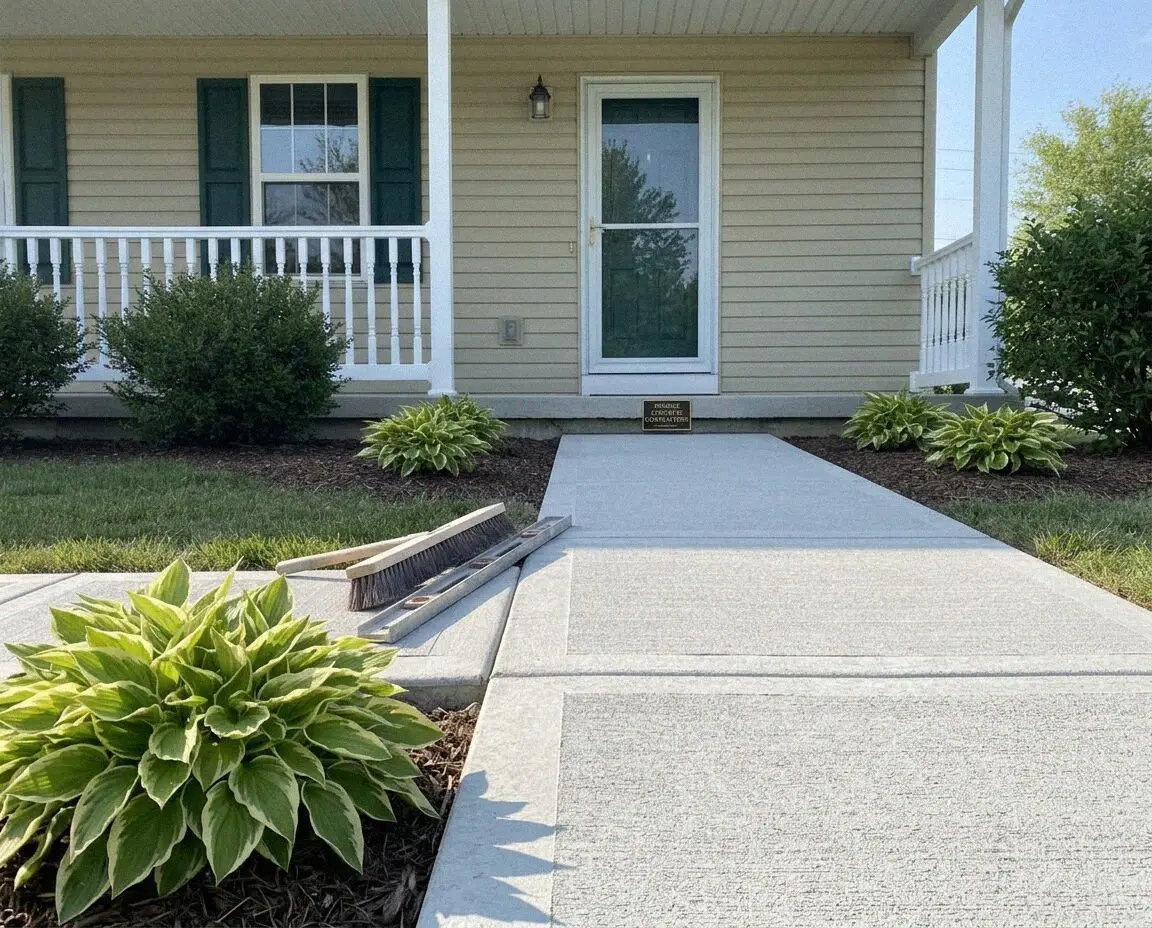
Crew washing exposed aggregate on a shaded front walk at a Fullerton, CA home
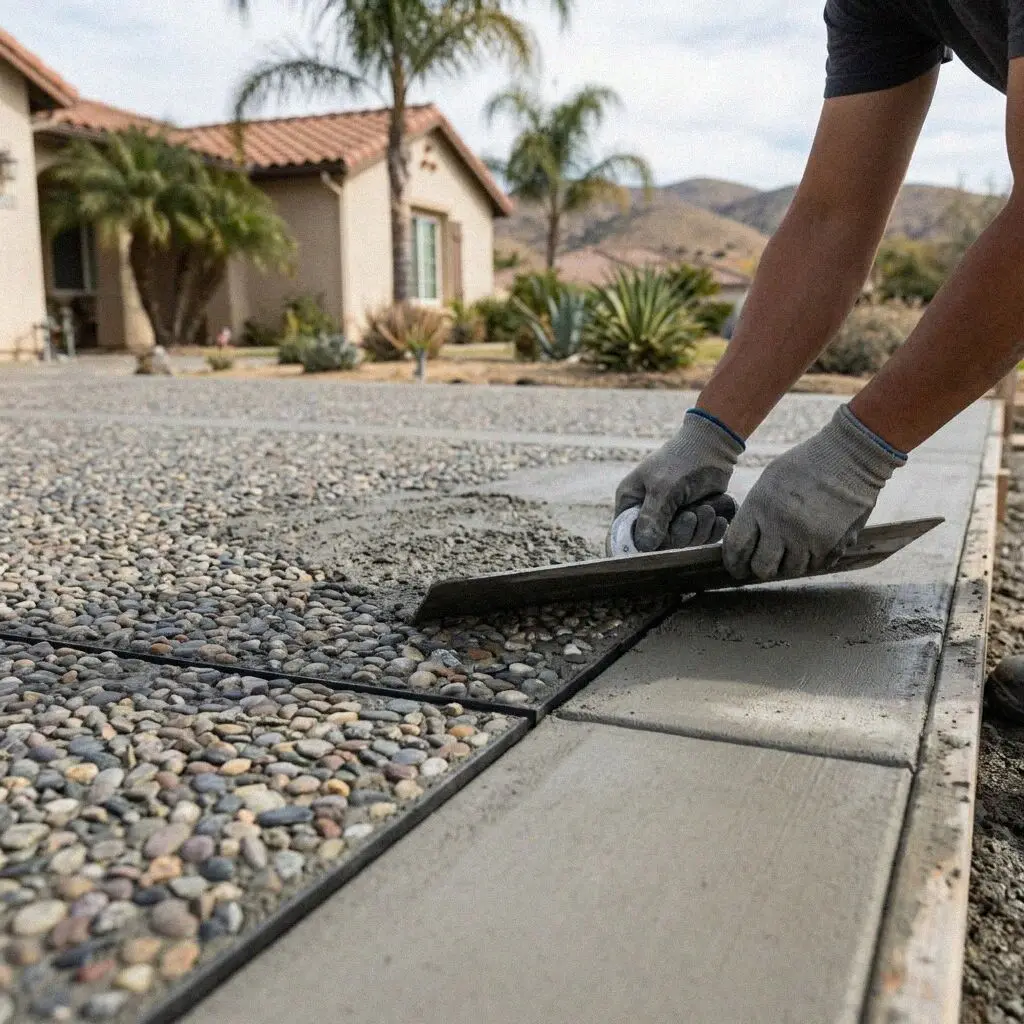
Hose and broom exposing river stone in a fresh patio slab in Fullerton

Finish, not slab

Decorative Concrete on a Fullerton Tract Lot

Decorative concrete is a plain slab given a surface meant to be looked at: stone washed proud of the paste, pigment batched through the load, a reactive stain that colors the top eighth of an inch, or a grid of saw cuts honed and sealed. The slab under all four is the one a broom finish gets, 4 inches on compacted rock, so the finish is about the top of the slab and not how it is built. What sets it apart is that it cannot be corrected once it has taken.

Harbor Fullerton Concrete was founded in 2021 by Grant Yoshida after 14 years on north Orange County crews, and he runs every decorative pour himself, because the finish is decided in the twenty minutes the surface is ready. Most decorative work in Fullerton is exposed aggregate, the finish the 1955 to 1975 tracts were poured with, and the trees planted along those streets now stand over the slabs. So a finish is picked in that shade, beside the brick and stucco it sits with.

The slab under any of the four is built to the California Residential Code under a CSLB C-8 license, with liability insurance on every job. A finish inside your own lot line needs no permit. A front walk crossing the parkway is public ground with the city's tree on it, so it takes an encroachment permit, which we file. The stone, pigment, stain and sealer are written down, and the slab carries a written workmanship guarantee against defects in how it was built.


Worn and lifted

When does a Fullerton decorative slab need redoing?

Stones loose underfoot

Exposed aggregate holds its pebble in a quarter inch of paste, and sixty years of brooms and feet wear that down until the stone stands more than a third proud. Each rain then lifts a few more out, and a walk that once felt like gravel set in glass sheds it. Sealer binds none of it.

A sealer gone white in the shade

A slab under a mature canopy stays damp into the afternoon for half the year, and a sealer rolled on over that moisture turns milky where water was trapped beneath it. The white patch maps the shade almost exactly. It will not clear on its own, and a second coat seals the water in.

Leaf stain that no longer washes off

Berries and leaves put tannin on a surface, and while the sealer holds it rinses away. Once the sealer has gone the tannin goes into the paste itself and a pressure washer only takes the paste with it. A dark ring the shape of the drip line, still there after a wash, is in the slab.

Panels lifted along the tree

A root grows in girth a fraction of an inch a year, and the panel above it rises the same until there is a step at the joint a shoe catches. At that point the finish stops being the question, because the slab has to come out to deal with the root. Grinding the lip buys a season.

On the sheet

What Goes Into a Decorative Slab in Fullerton

Eight things come with every decorative job here at no separate line, and each one answers something a Fullerton lot does: an old finish already on it, a tree over it, clay under it, and a house of brick and stucco the new surface has to agree with.

Old surface broken out

The worn walk or patio is broken out to soil and hauled off the same day, and any root found under it is cut back clean rather than poured over.

Ground opened by the tree

Where a trunk stands within reach the ground is opened to see what it holds, because a root under a slab lifts a finish as easily as a plain one.

Rock base rolled in

Four inches of crushed rock plate-compacted in place, the bed a plain slab sits on, so nothing about the finish asks the base to do extra work.

Stone or color by number

The aggregate or pigment is ordered by name on the batch ticket, and a sample panel is poured by the house so the color is read in its own shade.

Edges tooled and banded

A smooth banded border is tooled round every exposed panel, the detail that holds the edge stone in when a mower wheel or a bike catches it.

Cuts laid to the pattern

Saw cuts go in at 2 to 3 feet for every inch of depth and on the lines the finish draws, so a crack follows the design instead of crossing it.

Washed, cured, sealed

The surface is rinsed to bare stone or neutralized after the stain, kept damp for seven days, then sealed in two thin coats on a dry afternoon.

Recipe and guarantee

Stone, pigment number, stain and sealer go on the sheet you keep, with a written workmanship guarantee against defects in how it was built.

Side by side

Decorative Finishes for a Fullerton Slab, Compared

Four surfaces a slab here can be given, set against what each has to sit beside and what a tree over it does to it through a year. The slab under all four is the same, so the table is about the top quarter inch and how it lives.

OptionSuitsUnder a treeResealedWalk on it
Exposed aggregateA 1960s walk, porch or patio redoneStone hides tannin, paste needs sealerLeast often of the four48 hours, a week for a car
Integral colorA whole new patio in one toneShows a drip ring until resealedMore often than aggregate24 to 48 hours on foot
Reactive acid stainA sound slab that is already downMarks in shade unless sealer holdsMost often, the sealer is the finish24 hours after the last coat
Saw-cut and groundA plain slab wanted as a clean gridSweeps clean off the honed faceBetween aggregate and stain48 hours after the last coat

Integral color adds least to a new pour and a honed grid most; a stain costs less to do than to keep, because the sealer holds it and the sealer is what gets redone.

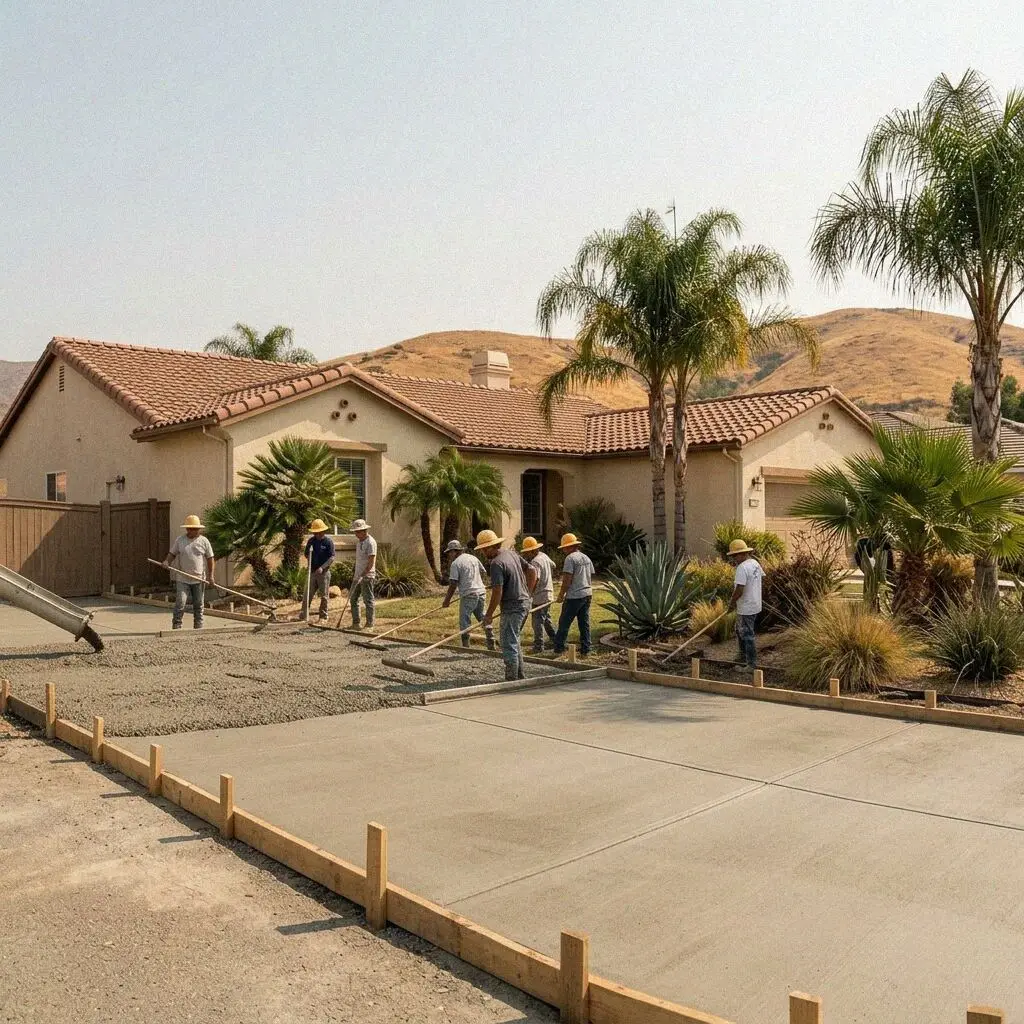
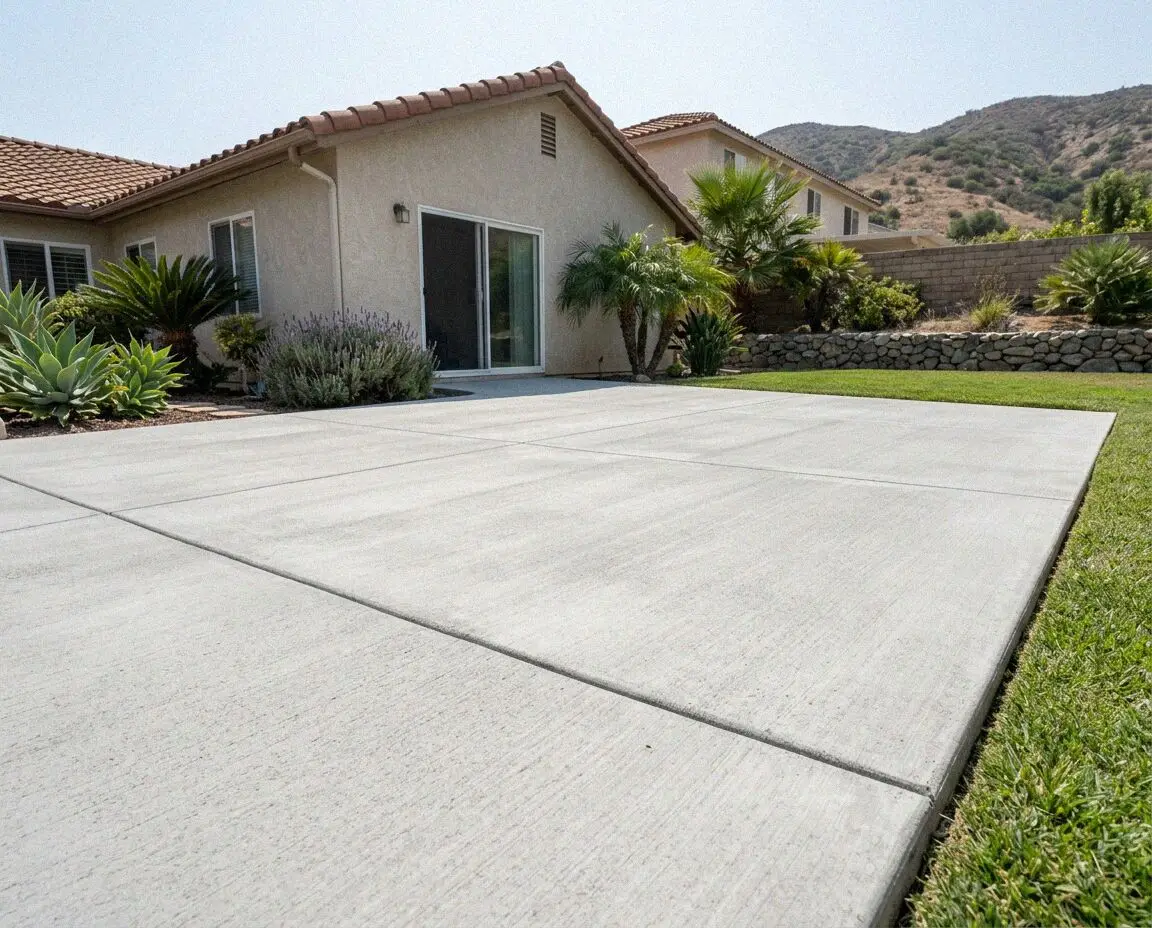
Concrete crew finishing a decorative patio at a home in Fullerton

Shade and roots

Why Fullerton Decorative Work Is Read Under a Tree

Two things settle a finish here: a tract poured between 1950 and 1979 that came with a finish of its own, and the street trees planted with it, now 50 to 70 years old and standing over the slab.

The ranch tracts through Sunny Hills and along Bastanchury Road were sold with exposed aggregate on the porch, the front walk and the patio, and most still have it. So a decorative job on one of those lots is a match rather than an invention: the pebble on the porch next door, the brick planter under the window and the stucco tone fix what the new surface can be. A stone chosen off a chip in open sun reads lighter than the porch it meets, so the sample sits on the lot a week first.

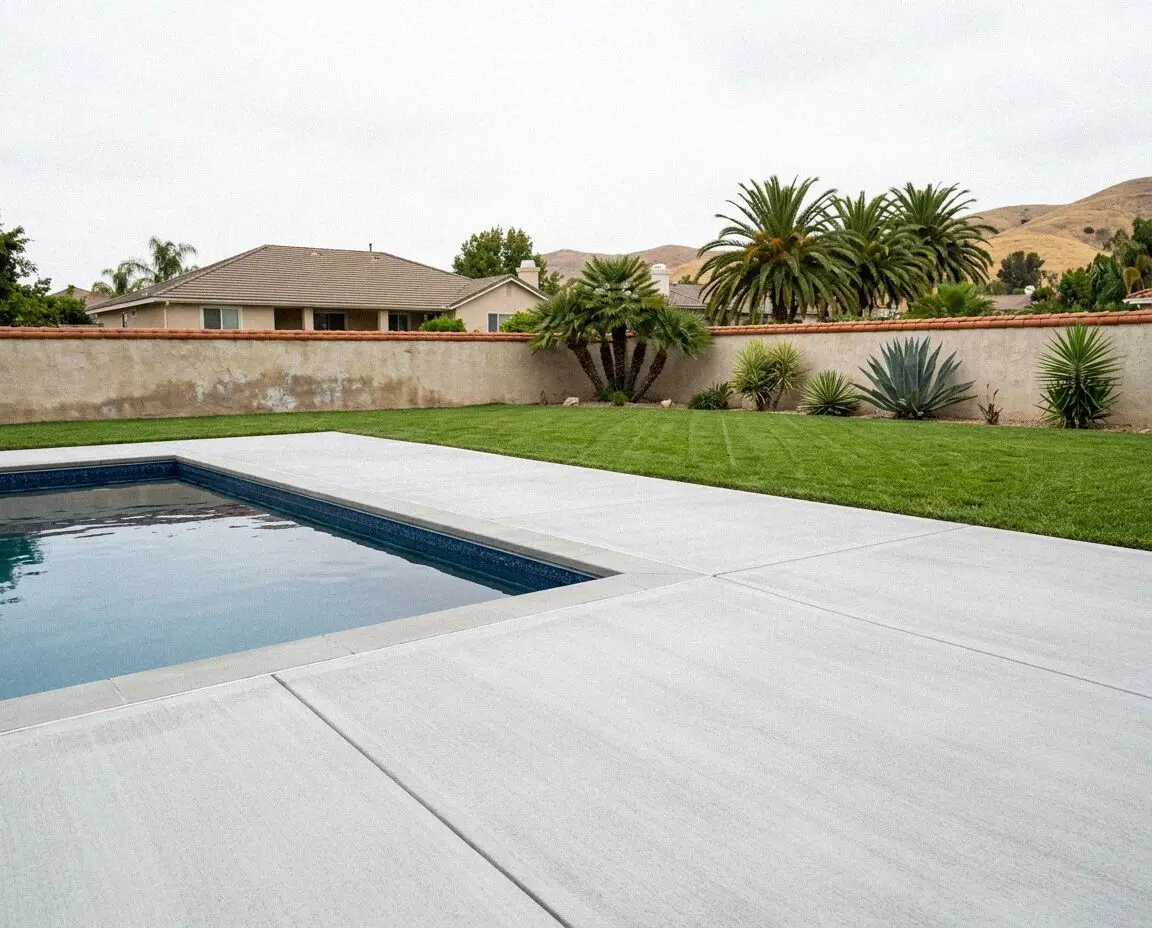
The trees are the second. A liquidambar or a camphor planted as a sapling when the tract was sold now shades the walk from midmorning, and the slab under it holds dew into the afternoon for half the year, takes leaf and berry through the rest, and has a root somewhere beneath. Shade slows a wash and holds a sealer off, tannin marks a light paste and hides in a dark stone, and a root decides whether the slab comes out at all. Round a pool the surface is built with the pool deck.

Sample to sealer

How We Finish a Decorative Slab in Fullerton

Five stages, one crew, and Grant Yoshida on the slab for the window when the finish is made. A wash or a stain is done when the surface says it is ready and not when the clock does, so the day is planned around the surface.

1

Read the house, pour a sample

Grant Yoshida measures the slab, photographs the brick, the stucco and the walk next door, and a sample panel is poured where the surface will sit.

2

Choose the finish, book the day

You pick from the panel after it has had a week in the shade, the stone or the pigment is ordered by number, and any parkway length is filed first.

3

Break out and open the ground

The old surface comes out to soil, roots inside the footprint are cut back and the clay under them checked, and the rock base goes in compacted.

4

Pour, then finish on the surface

The load is placed early, and the wash, the border tooling or the cuts happen in the window the surface gives, watched by eye rather than timed.

5

Cure, seal, hand over the recipe

Seven days damp, then the stone rinsed or the stain neutralized, two thin coats of sealer on a dry afternoon, and the recipe sheet handed over.

Behind the figure

What Moves a Decorative Estimate in Fullerton

The finish sets the number less than what is under it. Two patios the same size can be a day apart in work once the old surface is off and the roots are seen, so nothing is quoted from a photograph. Every estimate is measured and written on site.

A tract house front

A porch and front walk redone in aggregate is the shortest job here, and it moves with how much old slab comes out and what roots sit under it.

A fourplex or a court

Shared walks and a pool surround on a 1960s court are one pour, and the estimate moves with the panels a finish has to cross without a break.

A whole yard on the hill

On a Raymond Hills slope a patio, steps and a pool deck in one finish is set by the grade, the pump it calls for and the days the wash takes.

Stone ordered by name

A named pebble, a two-tone stain or a honed grid costs more than plain aggregate in material and hours, and the estimate says which by line.

The visit, the sample panel and the written figure cost nothing, and the call that fixes a time for them comes within 1 business day. (657) 500-3759 or send us a message.

Want your Fullerton slab read against the house?

Send the form or call, and someone rings back within 1 business day to fix a time. Grant Yoshida looks at the slab, the house and the tree over it, pours the sample and writes the figure at your property, and it can sit in a drawer.

Request a Free Estimate

Written on site · No obligation

By submitting, you agree to our disclosure and consent terms, including being contacted by Harbor Fullerton Concrete.

Surfaces we made

What Three Fullerton Owners Say About the Finish

Three reviews left on Google, Facebook and the BBB, each about a decorative surface rather than a plain pour, and each naming the finish and what it had to sit beside.

Google review

“Our front walk was the original pebble from 1964 and half the stone had gone. Grant poured a test square by the porch and it sat there a week under the liquidambar before we picked. The new walk meets the old porch and you cannot see where one stops. Two winters on and nothing has lifted.”

Marisol T. of Sunny HillsPebble walk matched to the porch · Google · 2025
Facebook review

“We wanted one color across a new patio and the steps down to it, and the first chip we picked looked orange next to the stucco. The panel showed that before anything was poured. They batched the pigment by number, cut the joints where the steps meet, and sealed it on a dry day a week later.”

Kevin B. of Amerige HeightsIntegral color patio and steps · Facebook · 2024
BBB review

“The porch slab on our 1920s house was sound but stained under the ficus and I did not want it broken out. They ground it, ran a brown acid stain in two passes and sealed it, and Planning was fine with it because the slab did not change. It reads like old tile from the street.”

Leticia S. of FullertonAcid stain on an existing porch · BBB · 2022

Before you pick

Decorative Concrete Questions From Fullerton

What moves the figure, how long the wash takes, which lengths the city looks at, what the guarantee says about color, and where the stone comes from, answered for a slab on a tract lot here.

(657) 500-3759
  • What changes the estimate for a decorative finish?

    The old surface and the ground under it, before the finish does. Breaking out sixty-year-old aggregate and cutting back the roots grown under it is most of the labor on a front walk, and the finish is hours on top of that. Then the finish counts. A named stone or a two-pass stain adds material and time that plain aggregate does not, and meeting an existing porch adds a match. All of it is measured at the lot.

  • How many days does an exposed aggregate walk take?

    Three days on site for a walk and porch, then a week before the sealer. The first day is breakout, roots and base, the second is forms and the pour, with the wash that same afternoon once the surface will hold the stone, so it runs late. The third is border tooling and saw cuts. The slab is kept damp seven days and sealed on the first dry afternoon after, and you walk on it 48 hours after the coat.

  • Is the sample panel part of the estimate?

    Yes, and it is poured before the estimate is signed, not after. A two-foot square of the stone or the color goes down beside the house where the finish will live and sits a week in that shade before anyone chooses, because a pebble read in open sun comes out lighter than the porch it has to meet. If the first panel is wrong a second is poured. It comes out when the job is done, or stays as a stepping stone.

  • Which decorative work does Fullerton want to see first?

    The length in the right-of-way, and a front on a preservation street. A patio or walk inside your own lot line is finish work and needs no permit. The stretch of front walk across the parkway is public ground with a city tree on it, so it takes an encroachment permit and the roots there are the city's to rule on. On a Residential Preservation Zone street the front is reviewed by Planning first. We file both.

  • Does insurance cover a slab a tree root has lifted?

    Usually not, because a root lifting a slab over twenty years is wear, and homeowners policies here treat wear as maintenance. Where a city parkway tree has lifted the public walk the Public Works counter is the place to ask, which is a different conversation from your patio. What a policy may cover is a single event, a vehicle or a burst irrigation line washing the base out. Photograph the slab first.

  • What does the guarantee say about the color?

    That the finish was made to the recipe on the sheet, the stone or pigment number, the stain, the passes and the sealer, on a slab built to the depth, base and joints written before you signed. That is a written workmanship guarantee against defects in how it was built. Concrete is not paint, so a stain varies across a slab by design. Sun fading and sealer wear sit outside it; where the fault is ours we come back.

  • Where does the stone in exposed aggregate come from?

    From the ready-mix plant's yard, ordered by name and size on the batch ticket so it can be matched again in ten years. The rounded pebble the tracts here were poured with was river gravel, and the plants still carry it at three-eighths inch beside a crushed stone with a sharper face. A seeded finish, a chosen stone cast onto the surface rather than batched through it, is used where no plant stocks the match.

  • Do I need to be there when the surface is washed?

    No, and the choices are better made before that afternoon than during it. You are needed at the start, to pick from the panel, and at the end, for the walk-through with the recipe sheet. The wash or the stain happens in a window of about twenty minutes when the surface is ready, and the crew is watching the slab and not the door. Leave the hose bib on and the gate unlocked, and keep feet off the slab for 48 hours.

Where we finish

Decorative Concrete Around Fullerton

Eight towns, the nearest first, each with how far it lies from the yard on Harbor Boulevard in a straight line. The sample panel travels to every one of them, and so does the man who writes the figure.

Show All Areas We Serve

Have a sample poured beside your Fullerton house

Call or send the form and you hear back within 1 business day. Say what the finish has to sit beside and whether a tree stands over the slab, and the visit and the sample panel can be booked for a day inside the same week.